




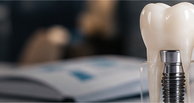

All-on-6 Implant Türkiye: Planned Fixed Full Jaw Rehabilitation on Six Implants
All-on-6; It is one of the implant-supported rehabilitation methods that aims to prepare a fixed full jaw prosthesis on a six implant strategically placed in a jaw in suitable patients who are completely edentulous or where it is not possible to preserve most of their existing teeth.
However, at DentHolding Clinics, we do not consider All-on-6 treatment just as “Placing 6 implants”.
Preservability of existing natural teeth, condition of the jawbone, distribution of implants, temporary prosthesis, healing period, final fixed prosthesis, closure, chewing forces, aesthetics, speech and long-term cleaning are parts of the same treatment system.
Because implants are just infrastructure. The main structure that the patient uses every day is the fixed full jaw prosthesis prepared on implants.
All-on-6 = Not 6 Implants, but a Complete New Dental System
Six implants form the basis of treatment. What determines the final result is the correct planning of the prosthesis to be placed on the implants.
Placing the implants in the correct positions; It is important in terms of supporting the final prosthesis, distribution of chewing forces, closure, aesthetics and cleanability.
At DentHolding Clinics, we consider surgical and prosthetic planning not as two separate treatments, but as complementary stages of the same full jaw rehabilitation.
All-on-6 Who Can Be Considered?
All-on-6 can be evaluated especially in appropriate patients who have lost all their teeth or in whom long-term preservation of most of their existing teeth is not possible.
However, having a large number of problematic teeth does not mean that all natural teeth must be automatically extracted.
At DentHolding Clinics, the prognosis of the remaining natural teeth is first evaluated. We care not about unnecessary extraction of protectable teeth, but about determining the right treatment for the patient's long-term oral health.
| Clinical Status | How Do We Rate? |
|---|---|
| Complete Edentlessness | It is evaluated whether a fixed full jaw prosthesis can be supported using six implants in one jaw. |
| Many Lost Teeth | The preserveability of the remaining natural teeth and alternative treatment options are evaluated. |
| Advanced Periodontal Problems | The prognosis of the teeth, bone loss and periodontal status are evaluated together. |
| Removable Prosthesis Use | If bone and general health conditions are suitable, full jaw options on fixed implants can be considered. |
| Bone Suitable for Wide Implant Distribution | If six implants can be planned in appropriate anatomical regions, a wider implant distribution can be used. |
6 Implants Are Not the Right Number for Every Patient
In some patients, All-on-6 may be a suitable option, while in another patient, All-on-4 or an All-on-X plan using a different number of implants may be more appropriate.
At DentHolding Clinics, we do not match the patient to the number of implants. We first plan the bone and final prosthesis, then determine the number of implants required.
AOne of the Most Important Differences of All-on-6: Wider Implant Distribution
In the All-on-6 system, six implants are placed in one jaw.
In appropriate bone and anatomical conditions, additional implants can help distribute the prosthetic support over a larger area along the jaw.
This may be advantageous in terms of planning how chewing forces will be distributed on the implant system.
However, just having a large number of implants is not enough for a successful treatment.
Positioning the implants in the right areas and in line with the correct prosthetic plan is more important than the number.
Not More Implants, More Correct Support
The goal of All-on-6 is not to place as many implants as possible in the patient.
The aim is to utilize six implants in the correct positions to support the final fixed prosthesis in suitable patients.
AFirst Step in All-on-6 Treatment: Evaluating Your Jawbone
In order for six implants to be planned, appropriate bone support must be present in the necessary areas of the jaw.
Therefore, it is important to evaluate the jawbone and existing natural teeth before deciding on All-on-6 treatment.
Send Your X-Ray and Let's Start Your All-on-6 Evaluation Before You Come to Türkiye
You can share your panoramic dental x-ray or existing dental X-ray images with the DentHolding Clinics team.
These images can help our physicians pre-evaluate your existing teeth and the general condition of your jawbone before coming to Türkiye.
Initial evaluation can provide initial information about whether All-on-6 may be considered, whether All-on-4 or a different All-on-X plan may be more appropriate, and the possible need for bone.
If the images you have are not sufficient for definitive surgical planning, the necessary advanced radiological evaluations are planned together with your clinical examination when you arrive in Türkiye.
What Are We Examining in the Online All-on-6 Preliminary Evaluation?
| Review | Why is it important? |
|---|---|
| Existing Natural Teeth | It is evaluated whether there are teeth that can be protected. |
| Jawbone | Provides preliminary information about the areas where six implants can be planned. |
| Bone Loss | Helps in the preliminary evaluation of whether graft or different surgical procedures are required. |
| Opposite Jaw | Helps evaluate the chewing forces that the final prosthesis will encounter. |
| Final Prosthesis | It is one of the main factors that determine in which areas implants should support the prosthesis. |
AWhat is the Difference Between All-on-4, All-on-6 and All-on-X?
It is not correct to say that one of these systems is better than the other for every patient.
All-on-4 four implants in one jaw, All-on-6 refers to the planning of a full jaw fixed prosthesis over six implants.
All-on-X, on the other hand, refers to a more general approach that personalizes the required number of implants according to the patient's bone, anatomy and final prosthesis plan, instead of pre-binding the number of implants to a single number.
| Feature | All-on-4 | All-on-6 | All-on-X |
|---|---|---|---|
| Number of Implants | 4 | on a chin6 | on a chinPersonally determined |
| Implant Distribution | Four strategic implant sites | Wider distribution can be planned with six implants | Customized according to bone and prosthesis needs |
| Bone Need | May assist in strategic use of existing bone in some cases | Appropriate bone support required at six implant sites | Implant distribution is determined according to the existing bone |
| Prosthetic Support | 4 via implant | Wider support distribution over implant6 | According to the requirement of the final prosthesis |
| Bone Graft | May reduce the need for extensive grafting in some suitable cases | If there is not enough bone for six implants, a graft may be required | Determined according to the person and implant areas |
| Which is Better? | There is no single correct answer. Bone structure, jaw anatomy, opposite jaw, chewing forces and final prosthesis plan should be evaluated together. | ||
4? 6? Or is it X?
We do not choose the number of implants first. First, we evaluate the patient and the final prosthesis.
If there is enough bone for six implants and this distribution contributes to the final prosthesis plan, All-on-6 may be preferred.
The correct number is not the highest number. The correct number is the number needed for your treatment.
AWe Evaluate Your General Health Before All-on-6 Treatment
Since All-on-6 involves multiple implant surgery, it is important to evaluate the patient's general health condition.
Systemic diseases, medications used, conditions that may affect recovery, and smoking/tobacco use may affect the treatment plan.
Diabetes, cardiovascular diseases, bleeding disorders, certain diseases and medications that affect the immune system or bone metabolism are especially evaluated.
If necessary, the opinion or approval of the relevant specialist physician who follows the patient may be requested.
In some clinical situations, it is possible for implant surgery to be postponed or deemed unsuitable.
We Make Sure It's Safe First
The All-on-6 decision is not based solely on having room for six implants in the jaw. Your general health condition, medications used, oral health and factors that may affect recovery are evaluated together.
AHow Many Times Do You Need to Come to Türkiye for All-on-6?
For standard two-stage appropriate All-on-6 treatment, international patients usually need to come to Türkiye at least twice.
At the first visit, clinical and radiological evaluations are completed, necessary tooth extractions can be performed, and six implants are placed in the planned positions.
If the implants have sufficient primary stability and other clinical conditions are suitable, a temporary fixed full jaw prosthesis can be applied to be used during the recovery period.
A waiting period is required for the implants to biologically integrate with the bone and for the surrounding tissues to heal.
In most standard cases, a healing period of at least approximately 3 months is usually planned before moving on to the final prosthesis stage. It may be longer depending on the clinical situation.
All-on-6 Treatment Journey
Usually 2 Visits to Turkey
1. Türkiye Visit
Examination → Planning → Necessary extractions → 6 implants → Temporary fixed teeth, if appropriate
Recovery Period
Usually at least about 3 months
2. Türkiye Visit
Control → Measurement / Digital recording → Rehearsals → Final fixed prosthesis → Closure → Aftercare
ACan fixed teeth be made on the same day with All-on-6?
In suitable patients, it may be possible to apply a temporary fixed full jaw prosthesis after implant surgery.
However, it is important to understand the concept of "same day teeth" correctly here.
Fixed teeth applied after the first surgical stage are mostly temporary prostheses prepared to be used during the healing period of the implants.
The permanent final prosthesis is prepared in the second stage after the implants and surrounding tissues have healed.
Same Day Teeth Cannot Be Guaranteed for Every Patient
In order for the temporary fixed prosthesis to be used immediately after implants, the implants must show sufficient primary stability and clinical conditions must be appropriate.
Safe healing of implants is more important than just being able to deliver fixed teeth on the same day.
Are Temporary Teeth and Final Teeth the Same Thing?
No.
| Temporary Fixed Prosthesis | Final Fixed Prosthesis |
|---|---|
| It is prepared to be used during the healing period of implants. | Prepared for long-term use after recovery. |
| Tissues and load control during the healing period are taken into account. | Healed tissues, aesthetics, speech and final closure are taken into account. |
| Controlled use and feeding required. | Prepared according to the final function and chewing plan. |
Why Are We Waiting For Final Prosthesis?
After the implants are placed, a biological integration process occurs between the bone and the implant surface.
At the same time, healing and shape changes may occur in the gums and other soft tissues after tooth extractions and surgery.
Preparing the final prosthesis after this healing; It helps to evaluate aesthetics, speech, closure and cleanability more accurately.
1st Visit → 6 Implants → Temporary Teeth → Healing → 2nd Visit → Final Teeth
In standard suitable cases, a healing period of at least approximately 3 months is usually planned before moving on to the final prosthesis stage.
AIs Bone Grafting Required in All-on-6 Treatment?
Yes.
In the All-on-6 treatment, appropriate bone support must be present in the areas where six implants will be planned.
If there is insufficient bone in one or more of the implant sites, local bone grafting may be considered.
If local bone support can be applied in the same session as implants, the number of visits to Türkiye may not increase.
However, if there is severe bone deficiency that does not allow safe placement of implants, a separate bone augmentation procedure may be required before implant surgery.
| Bone Condition | Treatment | Impact on Visit to Turkey |
|---|---|---|
| Enough Bone | 6 implants can be planned. | Usually 2 visits |
| Local Bone Deficiency | In appropriate cases, local graft can be applied simultaneously with the implant. | The number of visits may not increase |
| Advanced Bone Deficiency | Separate bone augmentation may be required first. | additional visit may be required |
6 We Don't Have to Do Unnecessary Bone Surgery Just Because We Want Implants
If the jaw anatomy is not suitable for All-on-6, a different implant distribution may be considered instead of fitting the patient to a six-implant plan.
This is where the value of the All-on-X approach comes in: before the number comes the patient.
AIs All-on-6 Treatment Painful?
All-on-6 implant surgery is mostly performed under local anesthesia.
By anesthetizing the surgical area, it is aimed that the patient does not feel pain during the procedure.
Temporary swelling, tenderness and discomfort may occur after treatment. The number of tooth extractions, bone procedures, and implants performed in the same session may affect the healing experience.
At DentHolding Clinics, we plan the surgical process in a way that is as controlled and patient-comfortable as possible, and we support the post-procedure period with personal care recommendations.
Know the Process Instead of Being Afraid of Surgery
Full chin implant treatment may seem extensive; However, the process is managed by dividing it into certain stages.
Before the treatment begins, we explain which teeth will be extracted and why, why six implants were chosen, how the temporary teeth will be used, and why the final prosthesis is prepared later.
AOne of the Most Important Stages of All-on-6 Treatment: Final Prosthesis
Although the number of implants in the name All-on-6 seems to be at the forefront, it is a full jaw prosthesis prepared on the substructure implant that the patient uses in daily life.
6 Implants are Essential. Final Prosthesis Completes the Treatment.
It is not enough for the final prosthesis to just look aesthetic.
The length of the teeth, smile line, lip support, speaking, chewing, closing and cleanability of the prosthesis should be planned together.
That's why, at DentHolding Clinics, we plan the implant system with the final prosthesis in mind from the very beginning.
AWhat Do We Consider in All-on-6 Final Prosthesis?
| Alan | Why is it important? |
|---|---|
| Smile Design | Allows evaluation of the harmony of the teeth with the face and lips. |
| Lip Support | It may affect the relationship of the full jaw prosthesis to facial appearance. |
| Speech | The phonetic effects of tooth positions and prosthesis form are evaluated. |
| Closing | A balanced distribution of chewing forces on the implant and prosthesis is aimed. |
| Cleanability | The patient must be able to clean under the prosthesis and around the sub-implant on a daily basis. |
| Soft Texture | The denture-gum transition is evaluated in terms of aesthetics and hygiene. |
AHow to Clean All-on-6 Fixed Dentures?
All-on-6 is a fixed full jaw prosthesis; However, being stable does not mean that it does not require maintenance.
There are areas that need to be cleaned under the prosthesis and around the implant.
Therefore, in addition to standard tooth brushing, special implant care tools may be required depending on the patient's prosthesis design.
At DentHolding Clinics, we care not only that the final prosthesis is aesthetic and functional, but also that it is designed so that the patient can clean it daily.
Just Because It's Fixed Doesn't Mean It Doesn't Need Maintenance
Teaching you how to clean under your All-on-6 denture is as important as handing over the denture.
AWhat are the Risks and Limitations of All-on-6 Treatment?
As with every implant treatment, All-on-6 treatment has possible risks and long-term care requirements.
At DentHolding Clinics, we attach importance to clearly explaining not only the advantages of the treatment but also these limits.
| Possible Situation | What Does It Mean? |
|---|---|
| Implant Not Integrating with the Bone | Not every implant can be guaranteed to be successfully osseointegrated. |
| Tissue Problems Around Implant | Plaque and inflammation can affect the gum and bone around the implant. |
| Temporary Denture Damage | High forces during the healing period may cause damage to the temporary prosthesis. |
| Prosthesis / Component Care | Maintenance, repair or replacement of prosthetic or mechanical parts may be required in the long term. |
| Threading | It can create high mechanical force on the implant system and prosthesis. |
| Inadequate Hygiene | Six can adversely affect the long-term health of the tissues surrounding the implant. |
We Don't Just Tell You "6 Implants Are Stronger"
Six implants may provide a wider implant distribution in suitable patients.
However, the correct treatment; It is achieved by planning the right patient selection, adequate bone, correct implant positions, correct prosthesis, correct closure and long-term care.
AWhat Does “Lifetime Warranty” Mean on All-on-6 Implants?
One of the expressions that patients frequently encounter when researching implant treatment is the phrase “lifetime guaranteed implant”.
The implant systems we use at DentHolding Clinics may include a lifetime product replacement warranty for the implant product itself, depending on the warranty terms of the relevant implant manufacturer.
However, it is important to be clear about what this means.
Lifetime Product Warranty ≠ Lifetime Clinical Success
Manufacturer's product assurance is not a guarantee that the implant will remain in the mouth without any problems for life.
Long-term success of the implant; It may be affected by bone, gums, general health, smoking/tobacco use, oral hygiene, closing forces and prosthesis maintenance.
We distinguish between manufacturer assurance and clinical success in the mouth.
What Happens If an All-on-6 Implant Fails in the Future?
First, the cause of the problem and the current bone and soft tissue condition in the relevant implant area are evaluated.
If the manufacturer's warranty conditions are met, the new implant product can be provided free of charge by the manufacturer.
However, providing a new implant product does not mean that the new implant can be applied to the same area or that the entire treatment will be provided free of charge.
In order for a new implant to be placed, there must be appropriate bone support in the area.
If there is bone loss, bone augmentation may be required; In some cases, the relevant area may not be suitable for re-implantation.
New Implant Product May Be Free; Not All of the New Treatment
The implant product itself can be provided free of charge if the manufacturer's warranty conditions are met.
However, new surgical procedures, medical services, bone grafting if necessary, laboratory procedures and re-preparation of the implant-supported prosthesis are evaluated separately from the manufacturer's implant product warranty.
At DentHolding Clinics, we describe the phrase “lifetime warranty” not as an eye-catching slogan, but as a product assurance whose scope must be clearly stated.
AHygiene and Sterilization in All-on-6 Treatment
Because All-on-6 involves multiple implant surgery, sterilization and infection control are essential parts of the clinical treatment process.
Preparation of the surgical field, sterilization of the equipment used and infection control processes are part of DentHolding Clinics' clinical work system.
But hygiene doesn't end on surgery day.
An important part of long-term implant care is that the patient can properly clean the base of the prosthesis and the area around the implant on a daily basis.
AWhy is Aftercare Particularly Important in All-on-6 Treatment?
In All-on-6 treatment, six implants together support a full jaw prosthesis.
Therefore, in long-term care, not only individual implants but the entire system should be evaluated.
Gum and bone tissues around the implant, hygiene under the prosthesis, closure and mechanical condition of the prosthesis may require regular monitoring.
6 Implants. Fixed Teeth. Systematic Maintenance.
Delivering your final prosthesis is not the final step of treatment; Knowing how to protect it is also part of the treatment.
We provide personal care training on how to clean under the prosthesis and around the implant before leaving Türkiye.
Fixed Teeth. Personal Care. Long-Term Support.
DentHolding Gum Care & Aftercare Protocol – All-on-6
For All-on-6 patients, the DentHolding Gum Care & Aftercare Protocol is one of the essential parts of full jaw treatment.
Implants do not decay like natural teeth; However, the health of the gums and supporting bone tissues around the implants must be maintained.
Therefore, we aim not only to apply the six implants and the final prosthesis, but also to ensure that the patient learns how to clean and protect this system.
| phase | What Do We Do? | Purpose |
|---|---|---|
| 1. Full-Arch Gum & Implant Check | The tissues around the implant, the prosthesis-gum relationship and general hygiene are evaluated. | Supporting healthy peri-implant tissues. |
| 2. Professional Implant Care | Necessary professional care and periodontal support are evaluated. | Supporting plaque and inflammation control. |
| 3. Full-Arch Cleaning Training | Describes how to clean around the implant and under the prosthesis. | Creating correct daily hygiene habits. |
| 4. Personal Home Care | A personal care routine is created according to the prosthesis design and the patient's mouth structure. | Supporting continuation of care after return to the country. |
| 5. Bite & Prosthesis Follow-Up | The need for control of bite, prosthesis and mechanical components is evaluated. | To follow the mechanical loads on the implant and prosthesis. |
| 6. DentHolding Aftercare | If necessary, information and remote communication support is provided after returning to the country. | Supporting international patient's post-treatment process. |
Leave Türkiye Not Only with New Teeth, but Knowing How to Protect Them
From how to clean under your All-on-6 denture to your routine professional check-ups, we view your long-term care approach as part of the treatment.
Clinical Care → Full-Arch Care → Personal Guidance → Home Care → Healthier Smile
All-on-6 Your Treatment Journey
| 1. Online Pre-Assessment | Your photographs and the panoramic x-ray or dental X-ray images you have are evaluated. |
| 2. Medical Assessment | Your general health condition, diseases and medications you use are evaluated. |
| 3. Full-Arch Planning | AWhether All-on-6, All-on-4, or a different All-on-X plan is more appropriate is determined. |
| 4. Extractions & Implant Surgery | The necessary extractions are performed and the six implants are placed in positions appropriate to the final prosthesis plan. |
| 5. Temporary Fixed Teeth | If primary stability and other clinical conditions are suitable, a temporary fixed prosthesis can be applied. |
| 6. Healing | A healing period of at least approximately 3 months is generally expected, or longer depending on clinical need. |
| 7. Final Prosthetic Planning | Final measurements or digital records are taken during the second visit to Türkiye; Aesthetics, speech, function and closing rehearsals are made. |
| 8. Final Fixed Teeth | After the checks, the final fixed full jaw prosthesis is applied. |
| 9. Gum Care & Aftercare | The personal daily and professional care system of six implants and a full jaw prosthesis is described. |
Why DentHolding Clinics?
6 implants. One Full-Arch Plan. Long-Term Care.
We plan the entire treatment system, not just six implants.
At DentHolding Clinics, we do not view All-on-6 treatment as a surgical procedure in which only six implants are placed.
Evaluation of existing natural teeth, bone structure, All-on-4 / All-on-6 / All-on-X selection, distribution of implants, temporary prosthesis, healing, final fixed teeth, aesthetics, speech, closure, cleanability, transparent disclosure of manufacturer product assurance and DentHolding Gum Care & Aftercare Protocol are parts of the same treatment system.
Our goal is not to sell “6 implants” to the patient; To create a full jaw rehabilitation appropriate to the patient's bone, function and final prosthesis needs.
Let's Evaluate Your Bone First. Then Let's Decide on the Correct Number of Implants.
Send Us Your Panoramic X-Ray or Dental X-Ray Image.
Is All-on-6 the right option for you? Could All-on-4 be enough? Or do you need a different All-on-X plan?
Do I need a bone graft? Can temporary fixed teeth be applied? How many times will you need to come to Türkiye?
Send Your X-Ray. Understand Your Full-Arch Plan. Then Travel.
AIs All-on-6 Really the Right Treatment for You?
Do you have enough bone for six implants?
Should your existing natural teeth really be extracted?
Could All-on-4 be enough?
Can All-on-6 provide broader support?
Could the All-on-X approach be a more personalized solution for you?
Do I need a bone graft?
Can temporary fixed teeth be applied at your first visit?
How will your final denture be designed and cleaned?
What exactly does the manufacturer's lifetime product replacement assurance cover?
You can start the initial evaluation of these questions before arriving in Türkiye.
Free Online All-on-6 Pre-Assessment
Share with us your panoramic x-ray or dental x-ray image and your current mouth/smile photos.
After the preliminary evaluation of DentHolding Clinics physicians, receive your first information about which of the All-on-6, All-on-4 or All-on-X options should be evaluated, possible bone need and your estimated Turkey visit plan.
Get Your Free Full-Arch Implant Assessment
Notification: Online evaluation is for preliminary information purposes and does not replace clinical examination and necessary radiological evaluations. All-on-6 eligibility; The preserveability of existing teeth is determined according to bone structure, anatomical conditions, general health status and final prosthesis plan. Using six implants does not necessarily mean a better or more successful treatment for every patient than All-on-4. In standard eligible All-on-6 cases, at least two visits to Türkiye are usually planned. A healing period of at least approximately three months is usually required in most standard cases between the initial implant surgery and the final prosthetic phase; It may take longer depending on the clinical situation. Application of a temporary fixed prosthesis after the first visit depends on the primary stability of the implants and other clinical conditions and cannot be guaranteed for every patient. If there is not enough bone in the implant areas required for All-on-6, local or more extensive bone augmentation procedures may be required. If local bone grafting can be done in the same session as implants, the number of visits may not increase; Additional visits may be required in patients requiring separate bone augmentation procedures. Systemic diseases and medications used may affect implant treatment; If necessary, the opinion of the relevant specialist physician may be requested. The manufacturer's lifetime product replacement assurance is not a guarantee that the implant will remain clinically successful in the mouth for life. Although the implant product can be re-produced if the manufacturer's warranty conditions are met, new surgical procedures, bone grafting, medical services, laboratory procedures and implant-supported prosthesis may also be evaluated. Whether the new implant can be reapplied to the same area depends on the bone and soft tissue conditions in the area. The definitive treatment plan is created after clinical examination and necessary evaluations.
- Personalized planning
- Digital assessment
- Natural appearance-oriented approach