







Dental Bridge: Not Replenishing the Missing Tooth, But Replanning the Chewing System
The gap that occurs when one or more teeth are lost is not just an aesthetic problem.
Eksik dişler; It can affect the chewing pattern, the position of neighboring teeth, the relationship of the teeth in the opposite jaw, and in some cases, speech.
Dental bridge is one of the treatment options that allows the missing tooth area to be completed with a fixed prosthesis with support from adjacent natural teeth or implants.
However, at DentHolding Clinics, bridge treatment is only available. “let's close the gap” We do not approach it like this.
The health of the supporting teeth, the number of missing teeth, gum condition, bite, chewing forces, aesthetic expectations and how the bridge will be cleaned in the long term are evaluated together.
Bridging a Gap is Easy. Planning the Right Bridge is More Important.
The success of the bridge does not depend only on the appearance of the porcelain or zirconium.
The teeth supporting the bridge must be strong enough, the loads must be distributed correctly, and the patient must be able to clean under the bridge.
At DentHolding Clinics, our goal is not only to make the missing tooth invisible; planning aesthetics, function and long-term maintenance together.
How Does a Dental Bridge Work?
In a classic dental bridge, suitable natural teeth on both sides of the missing tooth are used as supports.
Crowns are prepared on these support teeth, and the artificial tooth that completes the missing tooth area in between is combined with these crowns into a single fixed restoration.
Unlike removable dentures that the patient removes and puts on himself, a dental bridge is used as a fixed one.
Support Tooth → Missing Tooth → Support Tooth
The logic of the classical bridge system is that the chewing load in the missing tooth area is carried over the adjacent support teeth.
Therefore, the condition of the support teeth is as important as the bridge itself.
For Whom Can a Dental Bridge Be Considered?
| Status | Review |
|---|---|
| Single Missing Tooth | The condition of the adjacent teeth and the implant alternative are evaluated together. |
| Multiple Side by Side Missing Teeth | The length of the gap and the load that the supporting teeth can carry are evaluated. |
| Large Restorations on Adjacent Teeth | The bridge option may be suitable for some patients for adjacent teeth that already need crowns. |
| Cases Where Implant Is Not Suitable | When implants are not preferred due to bone, general health, anatomical or other clinical reasons, a bridge can be considered. |
| Patients Who Do Not Want Implants | In suitable patients who do not want surgery, a fixed natural tooth supported bridge alternative can be considered. |
Is it right to make a bridge for every missing tooth?
No.
Especially if the natural teeth next to the missing tooth are completely healthy and without restoration, these teeth may need to be reduced in size to make a classical bridge.
For this reason, alternatives such as implants should be evaluated in patients for whom protecting healthy adjacent teeth is important.
Is It Really Necessary to Reduce Two Sound Teeth?
In order to make a classical bridge when a single tooth is missing, controlled preparation of the supporting teeth on both sides of the gap is often required.
If these teeth are completely healthy, it is important to consider the implant option in order to protect the natural tooth tissue.
At DentHolding Clinics, the aim is not to build bridges; is choosing the right missing tooth treatment for you.
Dental Bridge or Implant?
This is one of the most frequently asked questions by patients with missing teeth.
The two treatments are not alternatives to each other in every situation.
| Feature | Dental Bridge | Dental Implant |
|---|---|---|
| Support | Usually receives support from adjacent natural teeth. | It receives support from the implant placed in the jawbone. |
| Adjacent Teeth | In a classical bridge, the support teeth need to be prepared. | Usually no preparation of adjacent teeth is required. |
| Surgery | Natural tooth supported classic bridge does not require surgical implant procedure. | Implant surgery is required. |
| Treatment Duration | In most suitable cases it can be completed within a few days. | Most two-stage cases require implant healing time. |
| Bone | There is no bone requirement for the implant in the missing area. | Appropriate bone is required to support the implant. |
| Cleaning | The artificial tooth area under the bridge needs special cleaning. | Individualized daily cleaning around the implant is required. |
| Right Choice | It is determined according to the condition of the neighboring teeth, bone, general health, closure, treatment duration and the patient's expectations. | |
Bridge? Implant?
There is no single correct answer.
If preserving two healthy natural teeth is important, implants may come to the fore. If the abutment teeth already need extensive restoration, a bridge may be more appropriate for some patients.
Are teeth cut when a dental bridge is made?
In classical natural tooth supported bridge treatment, the teeth to be used as support must be prepared in a controlled manner.
This process is done so that the bridge crowns can fit properly on the teeth.
Amount of dental tissue to be prepared; It varies depending on the restoration material to be used, existing tooth tissue, old fillings, position of the tooth and clinical requirements.
At DentHolding Clinics, we attach importance to the preparation approach that preserves as much healthy dental tissue as possible.
Not All Bridges Are the Same
Different bridge systems can be evaluated depending on the location of the missing tooth and the supporting tissues.
| Bridge Type | General Approach |
|---|---|
| Classical Tooth Supported Bridge | Support is taken from the appropriate natural teeth on both sides of the missing tooth. |
| Implant Supported Bridge | In appropriate cases, more than one missing tooth can be replaced with an implant-supported bridge instead of placing a separate implant for each missing tooth. |
| Resin Bonded / Maryland Type Bridge | Especially in selected cases, the missing tooth can be replaced with a more conservative connection to adjacent teeth. |
| Cantilever Bridge | Only in certain cases, support on one side of the missing tooth is used; Careful patient selection is required due to mechanical load. |
Is an Implant Required for Each Teeth in Case of Missing More Than One Teeth?
No.
For example, if three teeth are missing side by side, a three-member implant-supported bridge can be planned on two implants instead of three separate implants in some suitable patients.
However, whether this is possible or not is determined by the length of the missing area, the bone, the position of the implants, chewing forces and the final prosthesis design.
An Implant is Not Necessary for Every Missing Tooth
The number of implants is not automatically determined by the number of missing teeth.
We plan how the final bridge will be supported safely and determine the number of implants required accordingly.
How Do We Evaluate Support Teeth for Bridges?
In classical bridge treatment, the condition of the support teeth is of critical importance.
| Review | Why is it important? |
|---|---|
| Remaining Intact Tooth Tissue | It is important for the safe support of the bridge. |
| Gum Health | Long-term care of crown margins and abutment teeth is associated with healthy periodontal tissues. |
| Root and Bone Support | Support teeth must be able to carry the additional load from the bridge. |
| Available Fillings / Crowns | It indicates whether the abutment teeth already need restorative treatment. |
| Root Treatment | The suitability of the existing root canal treated tooth as a restorative and periodontal support tooth is evaluated. |
| Closing and Bruxism | High chewing forces can increase the mechanical risk of bridges and abutment teeth. |
Does Root Canal Treatment Need to Be Performed on a Healthy Tooth for a Bridge?
Routinely not.
It is not necessary to automatically perform root canal treatment on a live and healthy support tooth just to make a classical bridge.
However, if the tooth already has deep caries, large restorations, pulp problems, or other clinical needs, root canal treatment may also be considered.
We Do Not Perform Unnecessary Root Canal Treatment Just Because We Are Building Bridges
We care that each treatment is applied only as much as is truly necessary.
What Materials Can a Dental Bridge Be Made From?
Bridge material; It is determined according to the missing tooth area, length of the bridge, chewing forces, support teeth and aesthetic expectations.
In appropriate cases, zirconium, different ceramic systems or metal-supported restorations can be evaluated.
The material name alone does not determine the quality of the bridge.
Quality Bridge = Not Just Quality Material
Correct indication + correct support tooth + correct preparation + correct laboratory + correct bite + correct cleaning.
Material is only one part of this system.
Can a Dental Bridge Look Natural?
A correctly planned bridge can provide an aesthetic appearance compatible with natural teeth.
However, the natural appearance does not consist only of tooth color.
The shape, width, length, surface character, light transmittance, smile line and transition to the gums of the teeth should be evaluated together.
Especially for frontal area bridges, aesthetic planning is done in more detail.
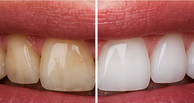
Can Teeth Whitening Be Performed Before Bridgestone?
If the patient also wants to lighten the color of his natural teeth, professional teeth whitening may be considered in some appropriate cases before determining the final bridge color.
Because completed porcelain or zirconium restorations do not whiten like natural teeth.
First Determine Your Natural Tooth Tone, Then Plan the Color of Your Bridge
If whitening is to be performed, the final color selection and timing of restorative procedures should be planned by your dentist.
Is Dental Bridge Treatment Painful?
Natural tooth supported bridge preparation is usually performed under local anesthesia.
By anesthetizing the treatment area, it is aimed to avoid feeling any pain during the procedure.
Temporary hot-cold sensitivity or gum tenderness may occur after preparation.
The level of sensitivity may vary depending on the initial condition of the supporting teeth and the extent of the procedure.
How Long Do You Need to Stay in Türkiye for a Dental Bridge?
Classic tooth-supported bridges, which do not require surgery, can often be completed within a single visit to Türkiye for health tourism patients.
Classic Dental Bridge
1 Türkiye Visit in Most Eligible Cases
About 5–7 Days
Examination → Planning → Tooth preparation → Digital recording / impression → Temporary teeth → Laboratory → Rehearsals → Final bridge → Closing → Aftercare
Treatment time may vary depending on the length of the bridge, the condition of the supporting teeth, the need for root canal treatment or gum treatment, and the laboratory process.
For implant-supported bridges, at least two visits to Türkiye are generally required due to implant surgery and biological healing.
Will I be toothless on the first day?
In appropriate cases, after the preparation of the supporting teeth, a temporary restoration can be prepared to be used until the final bridge is completed.
Temporary restorations help to control aesthetics, sensitivity and protect the prepared teeth during the treatment process.
However, the temporary restoration does not have the same materials and long-term usage features as the final bridge.
How to Clean Under the Dental Bridge?
This is one of the most important issues of bridge treatment.
There is no natural tooth root under the body part of the bridge that completes the missing tooth; However, areas where plaque and food can accumulate may occur between the gum and the bridge.
Normal dental floss may not be passed between the connected bridge members in the classical way.
For this reason, special dental floss, appropriate interface care products or cleaning methods that can reach under the bridge may be recommended for under-bridge cleaning, depending on the patient's prosthesis design.
Bridge is Fixed. Plaque Doesn't Have to Stay Stable.
If you cannot clean under the bridge, you may put not only the bridge but also the supporting teeth and gums at risk.
That's why, at DentHolding Clinics, we see under-bridge care training as a part of the treatment.
Can the Tooth Under the Bridge Decay?
Yes.
The abutment teeth under bridge crowns are natural teeth and can develop decay if not properly cared for.
Plaque accumulation, especially on the edges of the crown, inadequate oral hygiene, or problems with the restoration may affect the supporting teeth.
Therefore, having a bridge built does not mean that the supporting teeth will no longer decay.
What are the Risks and Limitations of a Dental Bridge?
A dental bridge is a fixed treatment option that has been used for many years; However, no restorative treatment is risk-free or guaranteed for life.
| Possible Situation | What Does It Mean? |
|---|---|
| Support Tooth Decay | New rot may form on the edge or under the bridge over time. |
| Gum Problems | Inadequate cleaning can contribute to plaque, bleeding, and periodontal problems. |
| Root Treatment Requirement | Pulp problems may develop in some supporting teeth over time and root canal treatment may be required. |
| Ceramic Damage | At high forces, cracks or fractures may occur in the bridge material. |
| Destimation / Relaxation | Problems may occur in the connection of the bridge over time. |
| Support Tooth Loss | Serious damage to a support tooth supporting the bridge may affect the entire bridge plan. |
| Bruxism | Teeth clenching or grinding can increase the mechanical load on the bridge and abutment teeth. |
We Don't Just Tell You The Good Side
A dental bridge is a powerful treatment option in suitable patients; However, the health of the support teeth and the cleanliness of the bridge can directly affect the long-term result.
How often is a dental bridge used?
There is no fixed period of use of a dental bridge that is valid for all patients.
Long term result;
- support the condition of the teeth,
- depends on the length of the bridge,
- fitting the restoration,
- to closing and chewing forces,
- bruxisme,
- for gum health,
- To oral hygiene,
- regular checks
It depends.
A properly planned and well maintained bridge can be used for many years; However, it is not correct to guarantee lifetime clinical success.
DentHolding Gum Care & Aftercare Protocol – Dental Bridge
Gum health is especially important to us in bridge treatment.
Because the bridge is a system that covers not only the missing tooth area, but also the supporting teeth and the gums around these teeth.
When we deliver your final bridge, we not only want you to know how it looks, we also want you to know how to clean underneath and around the abutment teeth.
| phase | DentHolding Approach |
|---|---|
| 1. Gum & Abutment Teeth Check | The periodontal condition around the support teeth, gums and bridge is evaluated. |
| 2. Clinical Gum Care | Necessary professional cleaning and periodontal care are planned before or after treatment. |
| 3. Bridge Cleaning Training | How to clean under the bridge and around the support teeth is explained in practice. |
| 4. Personal Home Care | A personal home care routine is created according to the bridge design and mouth structure. |
| 5. Bite & Restoration Follow-Up | The need for control of the bite, support teeth and bridge restoration is evaluated. |
| 6. DentHolding Aftercare | When necessary, post-treatment information and communication support is provided to international patients. |
Your New Tooth is Fixed. The Care Underneath Is Invisible But Very Important.
Proper cleaning under the bridge helps protect the support teeth and surrounding gums.
Bridge Care → Gum Care → Personal Guidance → Home Care → Healthier Smile
Healthy Gums. BetterCare. A Healthier Smile.
Your Dental Bridge Treatment Journey
| 1. Online Pre-Assessment | The dental X-ray image and current mouth/smile photographs you have can be used in preliminary evaluation. |
| 2. Clinical Assessment | The missing tooth area, support teeth, gums, bite and implant alternatives are evaluated. |
| 3. Correct Treatment Decision | It is determined whether a tooth-supported bridge, an implant, an implant-supported bridge or a different prosthesis option is suitable. |
| 4. Tooth Preparation | If a classical bridge is planned, the support teeth are prepared in a controlled manner. |
| 5. Temporary Restoration | In appropriate cases, temporary teeth are applied until the final restoration. |
| 6. Laboratory & Try-In | The bridge is prepared and aesthetics, fit, contacts and closure are checked. |
| 7. Final Bridge | After the checks are completed, the final bridge is applied. |
| 8. Gum Care & Aftercare | Under-bridge cleaning and daily care of support teeth are explained individually. |
Why DentHolding Clinics?
Not Just a Bridge. The Right Support for Your Smile.
We evaluate the whole system, not the missing tooth.
At DentHolding Clinics, we do not see a dental bridge as just a porcelain structure that covers a missing tooth.
Protectability of support teeth, implant alternative, length, material of the bridge, aesthetics, closure, gingival compatibility, cleanability and DentHolding Gum Care & Aftercare Protocol are parts of the same treatment.
We do not want to reduce the size of healthy neighboring teeth unnecessarily.
Likewise, we do not automatically recommend implants for every missing tooth just because implants are possible.
Our goal is not to sell bridges or implants; is to determine the right treatment for your missing tooth.
Bridge? Implant? Let's Evaluate Your Teeth First.
Send Us Your Dental X-Ray Image and Current Dental Photographs.
Are your support teeth suitable for a bridge?
Is implant better to protect healthy adjacent teeth?
Can an implant-supported bridge be made for more than one missing tooth?
Is there a need for gum treatment?
How many days should you stay in Türkiye?
Let's start your first evaluation before you come to Türkiye.
Send Your X-Ray. Find the Right Way to Replace Your Missing Tooth.
Notification: Online evaluation is for preliminary information purposes and does not replace clinical examination and necessary radiological evaluations. Not every missing tooth is suitable for a dental bridge. In classical tooth-supported bridges, preparation of the support teeth is required. In cases where there are healthy adjacent teeth, it may be appropriate to consider the implant option. Root canal treatment is not routinely required for every abutment tooth to be prepared for a classical bridge; The need is determined according to the clinical condition of the tooth. Classical and suitable bridge cases that do not require surgery can often be completed in a single visit to Türkiye and within approximately 5–7 days; Duration may vary depending on support teeth, additional treatments and laboratory process. Implant-supported bridges may require two or more visits due to biological healing of the implants. Restorative materials do not whiten afterwards like natural teeth; If whitening is planned, the treatment sequence should be determined by the physician. Lifetime clinical success cannot be guaranteed for dental bridges. The duration of use of the bridge depends on the condition of the supporting teeth, periodontal tissues, closure, restoration and oral hygiene. The definitive treatment plan is created after clinical examination and necessary evaluations.
- Personalized planning
- Digital assessment
- Natural appearance-oriented approach