






Composite Bonding: Reshape Your Smile by Protecting Your Natural Teeth
Composite Bonding; It is one of the conservative aesthetic dentistry applications that enables the rearrangement of the shape, proportions and some minor aesthetic irregularities of the teeth by using special aesthetic composite materials in tooth color.
One of the most important features of the treatment is that it can be applied to natural teeth in suitable cases, without any cutting or with minimal intervention.
Small gaps between teeth, small fractures, worn cutting edges, shape differences, some asymmetries and size-ratio problems of teeth can be reshaped directly in the clinical environment using composite materials.
The purpose is not just to add material onto the tooth. The natural form of your teeth, your facial structure, lip line, smile line, gum levels, current tooth color and bite are evaluated together to achieve a balanced result between aesthetics and function.
A Small Change Can Make a Big Difference in Your Smile
Not every aesthetic change requires teeth veneers or porcelain restorations.
If your natural teeth are healthy and your aesthetic needs arise from more limited problems such as small gaps, edge fractures, shape or proportion differences, Composite Bonding may be a more conservative option.
At DentHolding Clinics, we first evaluate your natural teeth; We care about choosing the treatment option that can meet your aesthetic and functional expectations with the least possible intervention.
Why Composite Bonding?
One of the important advantages of Composite Bonding is that restorations can be prepared directly in the clinic.
Since there is no need for a laboratory production process in every case, as is the case with porcelain restorations, the treatment can be completed in a much shorter program.
For this reason, Composite Bonding can be considered especially in suitable patients who want to protect their natural teeth as much as possible, aim for an aesthetic change in a short time, and are looking for a more economical option compared to Laminate Veneer.
Faster. More Conservative. Very Aesthetic.
About 1–2 Days in Suitable Cases
Examination, smile planning, composite application, shaping, finishing, polishing and bite control can be completed within a short clinical program.
One Visit. 1–2 Days. Minimal Intervention.
Highlights of Composite Bonding
| Feature | What Does It Mean for the Patient? |
|---|---|
| Minimum Intervention | In appropriate cases, it can be applied to natural tooth tissue without any preparation or with very limited intervention. |
| Quick Treatment | Depending on the scope of treatment, most cases can be completed within approximately 1–2 days of clinical program. |
| Economic Alternative | Since there is no laboratory or porcelain production stage, it may be more economical in many cases than Laminate Veneer. |
| Natural Aesthetics | A form and surface character close to natural teeth can be targeted with aesthetic composites with different colors and optical properties. |
| Single Türkiye Visit | In appropriate cases, treatment can be completed within the same trip to Türkiye. |
| Repairability | In some minor fractures or abrasions, local repair can be performed without replacing the entire restoration. |
Is Composite Bonding the Right Treatment for Every Patient?
No. Although Composite Bonding is a conservative and aesthetic option, it is not the right treatment for every tooth and every aesthetic problem.
Different restorative options may be required for teeth with advanced material loss, large cavities, serious closing problems, or teeth that are exposed to high mechanical forces.
Therefore, the purpose of the first examination is not only to determine "how many teeth will be bonded". It should be evaluated whether natural teeth are truly suitable for bonding.
First, We Determine the Correct Treatment
Laminate Veneer is not required for every small aesthetic problem, and not every problem can be solved with Composite Bonding.
While bonding may be the most conservative and correct option for some patients, Laminate Veneer, orthodontic treatment, zirconium or different restorative approaches may be more appropriate for some patients.
At DentHolding Clinics, our goal is not to sell a specific treatment; is to determine the right treatment for your natural teeth.
What Do We Consider Before Bonding?
| Area Considered | Why is it important? |
|---|---|
| Natural Tooth Tissue | Healthy enamel and existing tooth tissue affect the planning of bonding treatment. |
| bruises | Active caries must be treated before aesthetic restoration. |
| Closing | The contact of the lower and upper teeth can directly affect the forces that the bondings will be exposed to. |
| Teeth Clenching / Grinding | High forces can increase the risk of fracture and wear, especially in bonding on the incisal edges of the front teeth. |
| Gum Health | Healthy gums are important for both aesthetic appearance and cleanliness of the bonding area. |
| Tooth Color | Since the final color of the composite is determined by the natural tooth tone, it is important to evaluate this in advance if there is a whitening plan. |
Natural Tooth. Minimum Intervention. Personalized Design.
We aim to provide aesthetic change while preserving your healthy natural teeth as much as possible.
If Composite Bonding can meet your needs, we care about evaluating the conservative option before moving on to more comprehensive restorative treatments.
In Which Situations Can Composite Bonding Be Used?
After clinical evaluation, Composite Bonding can be evaluated especially for small and medium level aesthetic arrangements.
- Closing small gaps between teeth
- Repair of small fractures on the incisal edges of the front teeth
- Regulating the length and proportions of teeth
- Correction of minor deformities
- Making asymmetrical teeth more balanced
- Reshaping of worn tooth edges
- Aesthetic arrangement of the smile line
Are Teeth Cut for Composite Bonding?
One of the most important advantages of Composite Bonding in suitable cases is that it can be applied to the natural tooth without any cutting or with very limited preparation.
The composite material is bonded to the tooth surface with special adhesive systems and shaped in layers by the dentist directly in the clinic.
However, the current structure of each tooth is different. The exact approach is determined after clinical examination, as minor surface adjustments or restorative preparation may be required.
Does Composite Bonding Hurt?
Since no significant tooth preparation is required in suitable cases, Composite Bonding is generally a very comfortable procedure for the patient.
In some cases that do not require preparation, local anesthesia may not even be needed.
Local anesthesia can be used if necessary due to the current condition of the tooth, decay, sensitivity or additional procedures to be performed.
How Many Times Do You Need to Come to Türkiye for Composite Bonding?
Composite Bonding is one of the aesthetic treatments that can be planned in a short time for international patients.
Usually 1 Türkiye Visit
About 1–2 Days in Suitable Cases
Inspection, aesthetic design, composite application, finishing, polishing and closing checks can be completed within a short clinical program.
One Visit. 1–2 Days. Conservative Aesthetics.
| Treatment Plan | Turkey Visit | General Process |
|---|---|---|
| Composite Bonding | Usually 1 visit | Inspection → Design → Bonding → Polishing → Closing control |
| Whitening + Bonding | According to the treatment plan | Whitening → Color stabilization → Composite color selection → Bonding |
Your Composite Bonding Treatment Journey
| 1. Oral Health Check | Your teeth, gums, cavities, existing restorations and bite are evaluated. |
| 2. Correct Treatment Decision | It is determined whether Composite Bonding is the right treatment to meet your expectations. |
| 3. Smile Planning | Tooth form, length, proportions, color, smile line and harmony with the face are evaluated. |
| 4. Composite Layering | Aesthetic composite materials are applied and shaped in a controlled manner to mimic natural tooth characteristics. |
| 5. Finishing & Polishing | Final finishing and polishing is done to improve tooth form, surface character and shine. |
| 6. Bite Check | Especially the closing forces on the incisal tips of the front teeth are checked. |
| 7. Gum Care & Aftercare | Self-care guidance is provided on how to protect your bondings and gum line. |
Does Composite Bonding Have Limits and Risks?
Yes. Each treatment has its advantages and limits.
At DentHolding Clinics, we care about explaining to our patients not only the beautiful aspects of Composite Bonding, but also under what conditions breakage, wear, color change or maintenance may occur.
Knowing this information before treatment helps make a more accurate decision between alternatives such as Bonding and Laminate Veneer.
There is a Delicate Balance Between Aesthetics and Durability in Front Teeth
A careful balance must be established between natural aesthetic appearance and mechanical durability, especially at the incisal ends, that is, the cutting edges, of the front teeth.
The tip areas of natural front teeth generally have a thinner and light-permeable appearance. Aesthetic composite layering can be aimed to imitate these natural optical properties.
However, if the composite in the cutting edge area is designed too thin, small fractures or material losses may occur, especially under high force.
On the other hand, using too thick a material just to increase durability may negatively affect the natural form and aesthetic fineness of the tooth.
Therefore, successful Composite Bonding is not just about “making a beautiful tooth”. The correct balance must be established between aesthetic appearance, material thickness, closure and function.
What Can Increase the Risk of Breakage in Bondings?
| Status | Effect on Bonding |
|---|---|
| Very Thin Design on Incisal Ends | It can support the aesthetic and transparent appearance, but the risk of fracture may increase under high mechanical force. |
| Teeth Clenching / Grinding | Can cause repetitive high forces to be applied to composites in the front teeth. |
| Nail or Pencil Biting | It may cause small fractures by creating local and sudden force on the cutting edges. |
| Breaking Hard Foods with Front Teeth | Bonding can create intense force on it outside of its natural chewing function. |
| Closing Problems | Certain bondings may cause sustained or excessive force. |
| Wear Over Time | Composite material may show a decrease in surface gloss or wear on the edges in the long term. |
A Limitation Can Also Be an Advantage
Composite materials may need more maintenance, polishing or minor repairs over time than porcelain.
However, since Composite Bonding can be applied directly in the clinic, some minor fractures or abrasions can be repaired locally without completely replacing the existing restoration.
Bonding is not seen as “a material that requires no maintenance for a lifetime”; We consider it as a conservative treatment that protects the natural tooth as much as possible, is aesthetic and is open to maintenance and repair when necessary.
Can Teeth Whitening Be Done Before Bonding?
Yes. The order of the procedure is important, especially if both teeth whitening and Composite Bonding are planned.
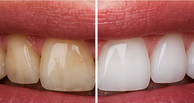
The color of the composite restoration is selected during application and the composite material does not whiten like natural teeth afterwards.
Therefore, if natural teeth are desired to be brought to a lighter shade, professional whitening can be performed first in suitable patients.
After waiting for the necessary time for the tooth color to stabilize, the color of the Composite Bonding material can be selected according to the new natural tooth tone.
First Determine Your Natural Tooth Tone, Then Choose Your Bonding Color
If Whitening and Composite Bonding are planned together, the order of the procedures and the appropriate time in between are determined by the dentist.
Laminate Veneer vs Composite Bonding
This is one of the most frequently asked questions by patients considering aesthetic treatment.
Although Composite Bonding and Laminate Veneer can solve some of the same aesthetic problems, their materials, treatment times, amount of intervention in the natural tooth, long-term color properties and maintenance needs are different.
The important thing here is not which one is "better"; which treatment is more suitable for your tooth structure and expectations.
| Feature | Composite Bonding | Laminate Veneer |
|---|---|---|
| Material | aesthetic composite resin | Fine porcelain/ceramic restoration |
| Dental Intervention | No preparation or minimal intervention in appropriate cases | Minimal preparation may be required depending on the case |
| Treatment Duration | About 1–2 days in suitable cases | Usually about 5–7 days |
| Turkey Visit | Usually 1 visit | Usually 1 visit |
| Laboratory | Mostly not needed; The restoration is prepared directly in the clinic. | Personalized porcelain restoration is prepared by laboratory process. |
| Cost | It may be more economical in many cases. | usually may be higher due to porcelain and laboratory process. |
| Esthetic | Very aesthetic results can be achieved with correct layering and polishing. | High level aesthetic planning is possible with the optical properties of porcelain. |
| Color Stability | Surface discoloration over time and or brightness change can be seen. | Porcelain surface is generally more resistant to discoloration. |
| Cutting Edge Durability | Minor fracture or wear may occur in high force areas. | It has different mechanical properties, but under excessive force, porcelain can also be damaged. |
| Repair | Some minor damage can be repaired locally directly in the clinic. | Depending on the extent of the damage, laboratory treatment or restoration of the restoration may be required. |
| Maintenance | Polishing or minor maintenance may be required over time. | Regular oral care and professional check-ups are required. |
Composite Bonding or Laminate Veneer?
There is no single right answer.
The current structure of your teeth, the magnitude of the desired change, your bite, your aesthetic expectations, your budget and your long-term care expectations are evaluated together to decide which treatment is more appropriate for you.
Does Composite Bonding Change Color Over Time?
Composite materials have different surface properties than porcelain restorations.
Frequent consumption of coffee, tea, tobacco products, and highly pigmented foods and beverages may contribute to surface discoloration or gloss change over time.
In some cases, the surface appearance can be improved again with professional polishing.
What Happens If Composite Bonding Breaks?
One of the important advantages of Composite Bonding is that some minor fractures can be repaired locally.
This does not mean that every fracture can be simply repaired. The extent of the damage, the area where the bonding is located, and the closing force that caused the fracture should be evaluated.
If there are recurrent breakages, it is important to investigate the cause of the breakage rather than simply re-add the material.
Why is Composite Bonding Preferred in Türkiye?
Türkiye is one of the important destinations for aesthetic dentistry by international patients from Europe and the United Kingdom.
The fact that Composite Bonding can be applied in a short time without the need for a laboratory process, can be completed in a single trip to Türkiye in suitable cases, and can be planned together with other dental procedures can provide significant advantages.
Composite Bonding can be considered as part of the same travel program, especially for suitable patients who come to Türkiye for routine dental check-ups, professional cleaning or whitening.
Is Composite Bonding More Economical in Türkiye?
Composite Bonding can be a more economical aesthetic option in many cases compared to Laminate Veneer.
One of the important reasons for this is that the restorations can be prepared directly in the clinic and there is no need for a porcelain laboratory production process.
Treatment costs in Türkiye may also be more affordable compared to private clinic fees in some European countries and the United Kingdom.
However, not only the price of treatment; It is important to look at the material quality, the physician's aesthetic planning, layering, finishing and polishing quality, bite control and post-treatment care support together.
Composite Bonding and Gum Health
Not only tooth form but also the health of the gum line is important in the aesthetic appearance of bonding.
If there is bleeding gums, active periodontal problems, dense plaque or tartar accumulation, the necessary professional care can be planned before the aesthetic procedure.
Correct cleaning of the gum borders with restoration after bonding is important in terms of protecting both natural teeth and gum tissues.
Healthy Teeth, Healthy Gums, A Natural Smile
We do not see Composite Bonding as just an aesthetic change on the teeth.
We evaluate the health of your teeth and gums, plan the necessary clinical care, and provide you with personal guidance on how to maintain your new smile in your daily life.
Healthy Teeth. Healthy Gums. Conservative Aesthetics.
DentHolding Gum Care & Aftercare Protocol
We do not see Composite Bonding treatment as a process completed only by applying the composite material to the tooth.
Gum health around new restorations, surface cleaning, discoloration control and daily care habits are important parts of the long-term success of the treatment.
Within the scope of DentHolding Gum Care & Aftercare Protocol, your dental and gum health is evaluated, necessary clinical care is initiated and personal guidance is provided on how to protect your bonding, natural teeth and gum line before leaving Türkiye.
| phase | What Do We Do? | Purpose |
|---|---|---|
| 1. Gum & Teeth Check | Natural teeth, bonding areas and gum health are evaluated. | Creating a healthy start for treatment. |
| 2. Clinical Care | Professional cleaning and appropriate periodontal care are planned if necessary. | Supporting gum health and oral hygiene. |
| 3. Bonding Care Training | Explains how to clean bonding, between teeth and the gum line. | Creating proper daily maintenance habits around the restoration. |
| 4. Personal Home Care | A personal care routine is created for brushing, interdental cleaning, surface discoloration and protection of the restoration. | To be able to continue your care consciously after returning to your country. |
| 5. DentHolding Aftercare | Information and remote communication support regarding bonding maintenance, polishing or restoration is provided when necessary. | Supporting your post-treatment care process. |
Correct Care Habits with Your New Smile
When you leave Türkiye, you will not only be with your new bonding; We aim to leave you with a care approach that knows how to protect your natural teeth, gums and restorations.
Conservative Treatment → Personal Guidance → Home Care → Healthier Smile
What Should Be Considered After Composite Bonding?
- Regular and correct brushing of teeth
- Daily cleaning between the teeth
- Not breaking ice or very hard foods with bondings
- Avoiding habits such as nail biting and pencil biting
- Pay attention to surface discoloration due to coffee, tea and tobacco products
- Professional polishing when necessary
- If there is teeth clenching or grinding, follow the physician's recommendations
- Maintain regular teeth and gum checks
How Long Does Composite Bonding Last?
It is not correct to give a single usage period valid for all patients for Composite Bonding.
Long term success; It depends on the size of the bonding area, bite, teeth clenching habits, the patient's nutrition, oral care and regular professional check-ups.
Usage habits and closing forces are of greater importance, especially in restorations made on the incisal tips of the front teeth.
One of the important advantages of composite material is that it can be polished, maintained or local repaired in some small areas when necessary.
Why DentHolding Clinics?
Minimal Intervention. Honest Planning. Natural Aesthetics.
Minimum intervention. Transparent planning. Natural aesthetics.
At DentHolding Clinics, we do not consider Composite Bonding just as a quick aesthetic application.
We consider the right patient selection, preservation of natural tooth tissue, color planning, bite control, aesthetics-durability balance on the incisal edges of the front teeth, gum health, finishing-polishing and DentHolding Gum Care & Aftercare Protocol approach as a whole.
We attach importance to explaining the limitations of the treatment as much as we explain its advantages. Because the right decision for us is not just what looks good today; It is a treatment that suits the patient's expectations and mouth structure.
Single Visit. Approximately 1–2 Days. Minimum Intervention.
Usually 1 Türkiye Visit for Composite Bonding
Before coming to Türkiye, you can start your pre-evaluation process for Composite Bonding by sharing current photos of your smile.
One Visit. 1–2 Days. A Smile Designed Around Your Natural Teeth.
Is Composite Bonding the Right Option for You?
Is bonding sufficient or is Laminate Veneer more accurate? Do your teeth need intervention? Should whitening be done first? Are the closing forces on your front teeth appropriate? Are your gums ready for treatment?
You can start the initial evaluation of these questions before coming to Türkiye.
Free Online Pre-Assessment
Share with us current photos of your teeth and smile.
After the preliminary evaluation by DentHolding Clinics dentists, get information about whether Composite Bonding is suitable for you, whether Laminate Veneer or a different treatment is more accurate, and your estimated treatment process.
Get Your Free Dental Assessment
Notification: Online evaluation is for preliminary informational purposes and does not replace a clinical examination. Composite Bonding suitability, number of teeth to be applied, material selection, preparation need, Treatment duration and cost are determined after clinical examination. Approximately 1–2 day treatment program is valid for suitable cases. In patients with active caries, periodontal disease, significant closing problems or high mechanical load, the necessary treatments can be planned first. Composite materials may show surface discoloration, wear, brightness change or breakage over time. When whitening and bonding are planned together, the procedure sequence and appropriate waiting time are determined by the dentist.
- Personalized planning
- Digital assessment
- Natural appearance-oriented approach